
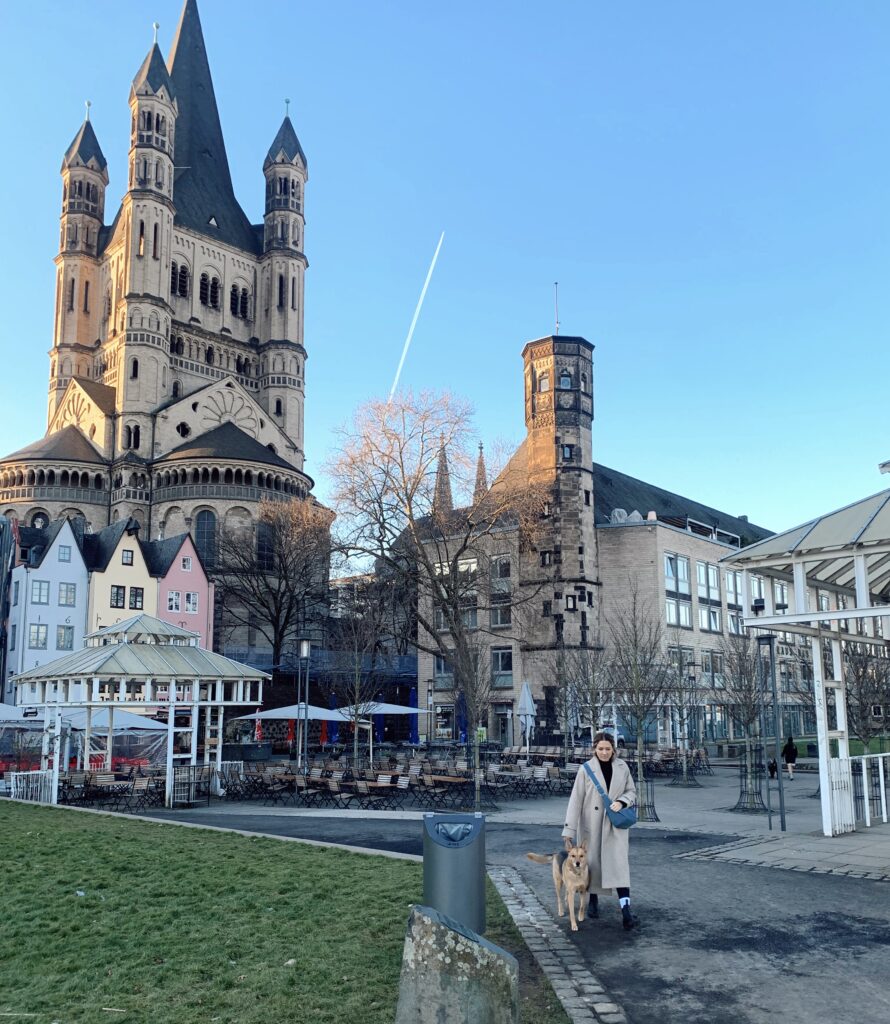
I have officially been living in Germany for 2 years now. I put a list together of places to visit in Germany, and I have to admit that I have not visited all the places in this Germany Bucket List Icons + Local Hidden Gems post.
However I have been keeping this list in my phone, and we are planning to visit them all in the next few years. Some we have already (we live in Cologne), and others are ones that I personally would love to visit. I hope they inspire you to visit Germany, as it truly has the most stunning cities, towns and culture.
This list will be a mix of fairytale castles, cutting-edge cities, Alpine lakes and medieval towns. Coffee culture and beer gardens. High-speed trains and quiet cobblestone streets – absolute bliss!
If you’re dreaming of visiting — or planning your itinerary — here are 20 bucket-list destinations that truly live up to the hype.
And yes… they’re worth it.
Bucket List Icons:
Berlin
What It’s Known For
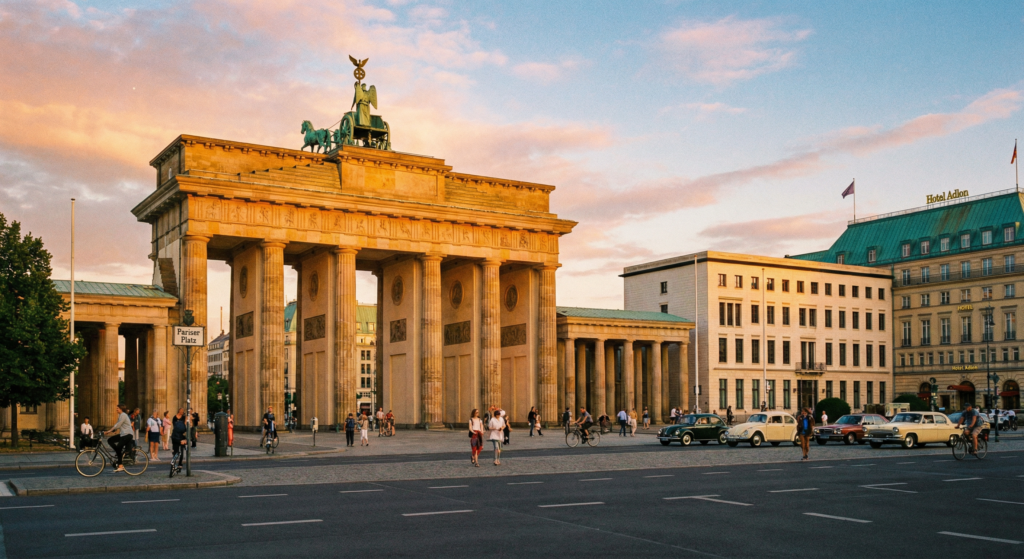
Berlin is known for being a city that has reinvented itself again and again. It carries layers of history — Prussian grandeur, WWII scars, Cold War division — and yet it pulses with modern creativity. It’s bold, artistic, politically aware, and unapologetically different from the rest of Germany. You’ll feel the contrast everywhere: grand museums beside graffiti walls, classical music drifting through neighborhoods known for underground clubs. Berlin isn’t polished — it’s powerful.
What To Do
- Visit the Brandenburg Gate
- Walk along the East Side Gallery
- Explore Museum Island
- Spend hours in cozy cafés in Kreuzberg
- Visit the Reichstag dome (book ahead!)
What To Eat + Where
Berlin is wildly diverse when it comes to food.
Must-try:
- Currywurst
- Döner kebab (it was perfected here)
Restaurants & cafés:
- Curry 36 (classic currywurst)
- Mustafa’s Gemüse Kebap
- Father Carpenter (beautiful brunch spot)
How To Get There
Fly into Berlin Brandenburg Airport (BER). From the airport, take the S-Bahn (about 30 minutes into central Berlin).
Germany’s ICE trains also connect Berlin to major cities like Munich, Hamburg, and Frankfurt.
Hotel Suggestions
- Hotel Adlon Kempinski Berlin (luxury, next to Brandenburg Gate)
- 25 hours Hotel Bikini Berlin (modern, fun vibe)
- The Circus Hotel (stylish and central)
Interesting Tip
Berlin has more bridges than Venice. And yes — you’ll feel it wandering around. This is definitely one of the places to Visit in Germany!
Munich
What It’s Known For
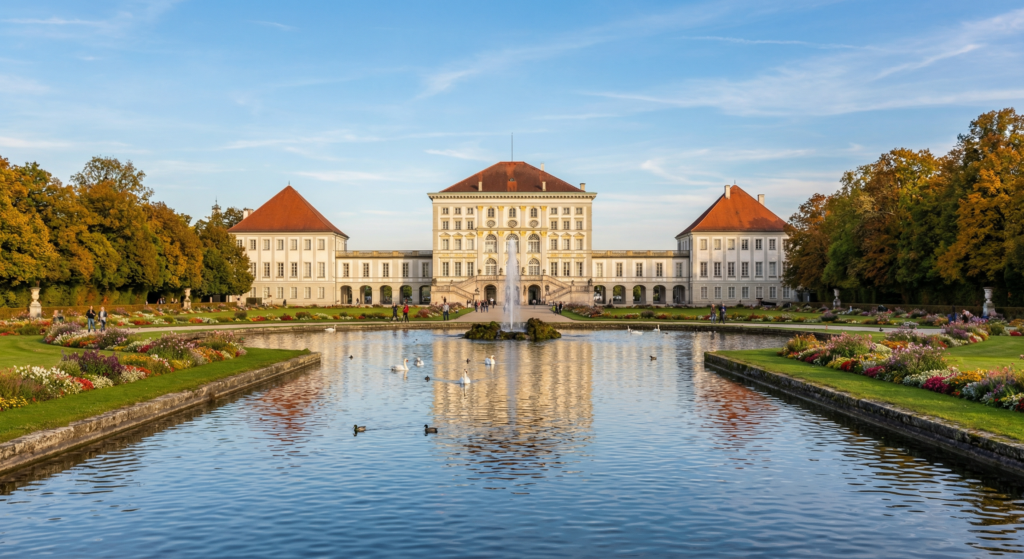
Munich is the postcard version of Germany — elegant, traditional, and effortlessly Bavarian. It’s known for beer gardens, dirndls and lederhosen, alpine proximity, and grand architecture. The city feels refined yet warm, where centuries-old traditions still shape daily life. Beyond Oktoberfest, Munich carries a sense of order and beauty — from perfectly maintained parks to ornate churches. It’s the kind of place where culture feels both preserved and lived in.
What To Do
- Explore Marienplatz
- Visit Nymphenburg Palace
- Relax in the English Garden
- Experience Oktoberfest (if visiting in autumn)
What To Eat + Where
Must-try:
- Weisswurst (white sausage)
- Pretzels
- Schnitzel
Restaurants & cafés:
- Hofbräuhaus München (iconic beer hall)
- Augustiner Bräustuben (local favorite)
- Man Versus Machine Coffee (excellent specialty coffee)
How To Get There
Fly into Munich Airport (MUC). The S-Bahn connects directly to the city center in about 40 minutes.
Hotel Suggestions
- Hotel Bayerischer Hof (luxury classic)
- Roomers Munich (modern chic)
- Hotel Torbräu (historic charm)
Interesting Tip
Locals picnic and even surf in the English Garden — yes, river surfing in the middle of the city.
Neuschwanstein Castle
What It’s Known For
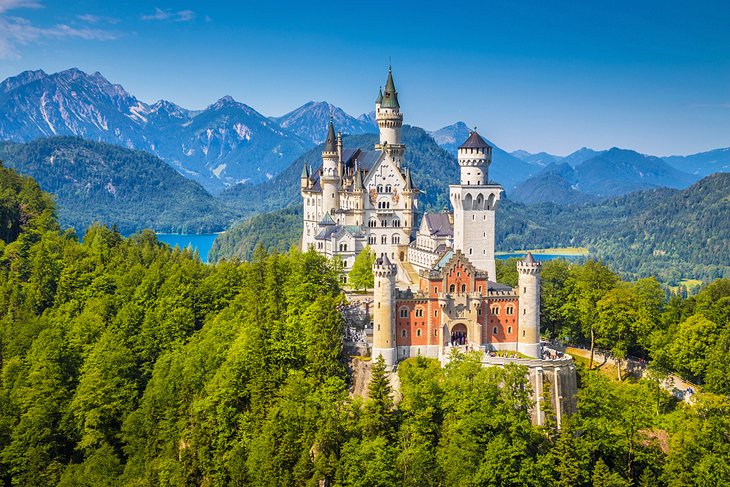
Neuschwanstein is known as the real-life fairytale castle — and it truly looks like it was lifted from a storybook. Perched dramatically in the Bavarian Alps, it’s surrounded by forests, lakes, and mountain views that feel almost unreal. Commissioned by King Ludwig II, the castle reflects romantic imagination more than practicality. It has become one of the most photographed landmarks in Europe for good reason. When you see it in person, it feels like stepping into a dream.
What To Do
- Tour the castle interior
- Hike up to Marienbrücke for the best photo
- Explore nearby Hohenschwangau Castle
What To Eat + Where
Small alpine-style restaurants surround the area.
- Schlossrestaurant Neuschwanstein (views + Bavarian dishes)
- Try Käsespätzle (German mac and cheese)
How To Get There
Take a train to Füssen from Munich (about 2 hours), then a short bus ride to the castle area.
Hotel Suggestions
- Hotel Müller Hohenschwangau
- AMERON Neuschwanstein Alpsee Resort & Spa
- Hotel Sonne Füssen
Interesting Tip
King Ludwig II, who commissioned the castle, only lived in it for 172 days before his mysterious death.
Cologne (my home)
What It’s Known For
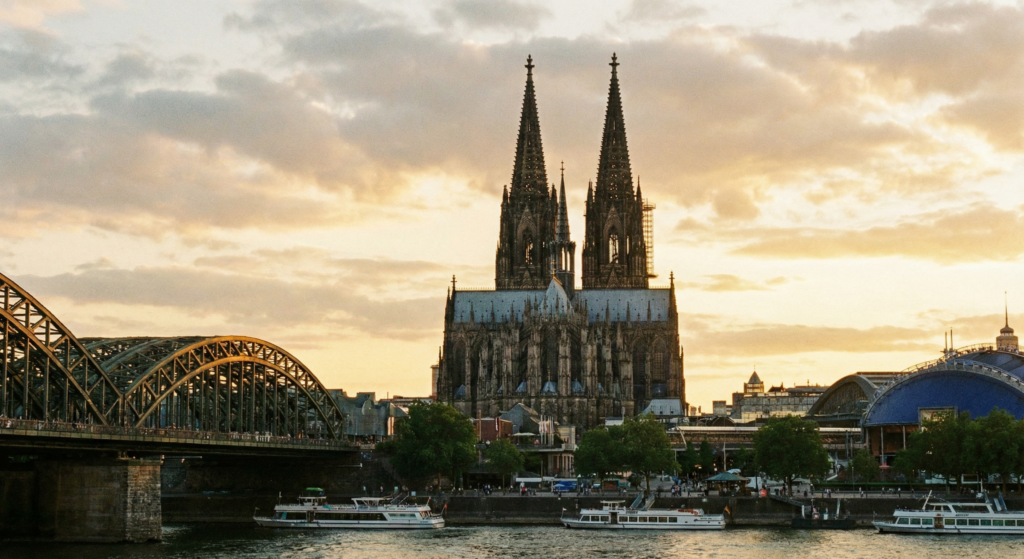
Cologne is known for its towering Gothic cathedral that dominates the skyline. The Cologne Cathedral is one of Europe’s most awe-inspiring religious structures, visible from nearly every corner of the city. But Cologne is also known for its lively, friendly spirit — locals are famously warm and humorous. It blends Roman history with modern riverside culture along the Rhine. The energy here feels open and welcoming.
What To Do
- Climb the cathedral tower
- Walk along the Rhine River
- Visit the Chocolate Museum
What To Eat + Where
- Kölsch beer (served in small glasses)
- Himmel un Ääd (local dish)
Restaurants:
- Früh am Dom
- Peters Brauhaus
How To Get There
Fly into Cologne Bonn Airport or take high-speed ICE trains from Frankfurt (about 1 hour).
Hotel Suggestions
- Excelsior Hotel Ernst
- Hyatt Regency Cologne
- 25hours Hotel The Circle
Interesting Tip
Construction of the cathedral took over 600 years to complete.
Hamburg
What It’s Known For
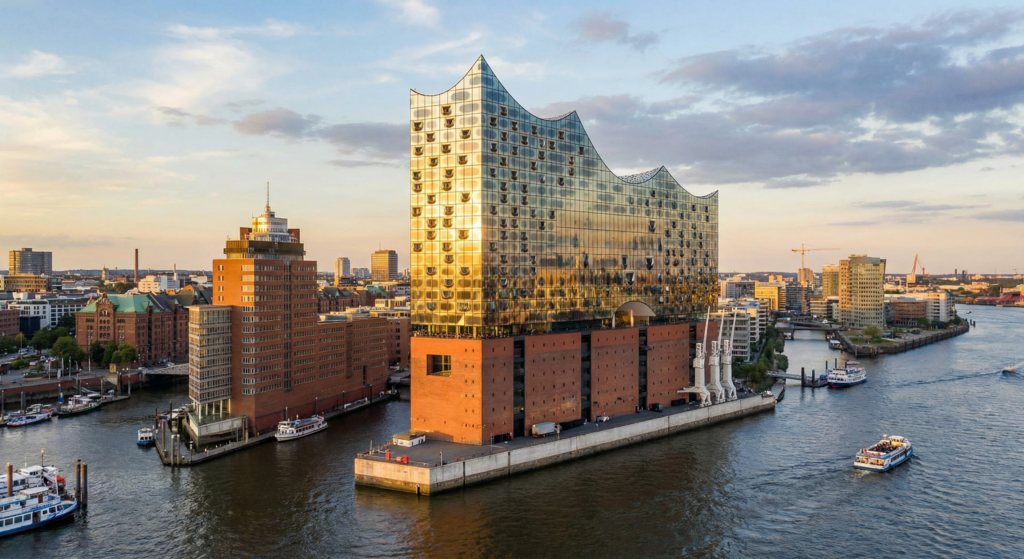
Hamburg is known for its maritime elegance and powerful port heritage. As one of Europe’s largest ports, the city has long been a gateway to the world. Its canals, red-brick warehouse district, and modern waterfront architecture create a stunning contrast. There’s a sophistication to Hamburg — understated but confident. It feels cosmopolitan, with a quiet coolness that surprises many first-time visitors.
What To Do
- Visit the Elbphilharmonie
- Explore Speicherstadt (warehouse district)
- Take a harbor boat tour
What To Eat + Where
- Fischbrötchen (fish sandwich)
- Labskaus (traditional sailor dish)
Restaurants:
- Fischereihafen Restaurant
- Nord Coast Coffee Roastery
How To Get There
Fly into Hamburg Airport or take ICE trains from Berlin (about 2 hours).
Hotel Suggestions
- Hotel Atlantic Hamburg
- 25 hours Hotel HafenCity
- The Westin Hamburg
Interesting Tip
Hamburg has more bridges than Amsterdam and Venice combined.
Heidelberg
Known For
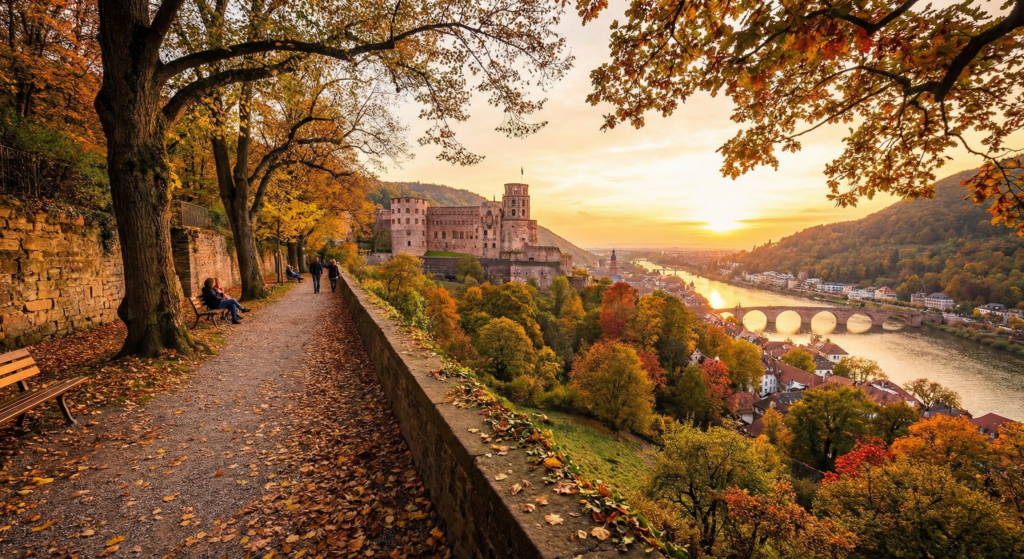
Heidelberg is known as Germany’s most romantic city — and it earns that title. Its hilltop castle ruins overlook a perfectly preserved old town and the gentle Neckar River. The city has long attracted poets, philosophers, and students, giving it an intellectual charm. Walking its cobblestone streets feels intimate and timeless. It’s elegant without trying too hard.
Do
- Walk the Philosopher’s Path
- Explore the castle ruins
- Wander the Old Bridge
Eat
- Schnitzel
- Local wine
Café tip: Café Knösel
Hotels
- Hotel Europäischer Hof Heidelberg
- Arthotel Heidelberg
Tip
Heidelberg inspired many Romantic-era poets and painters.
Black Forest
Known For
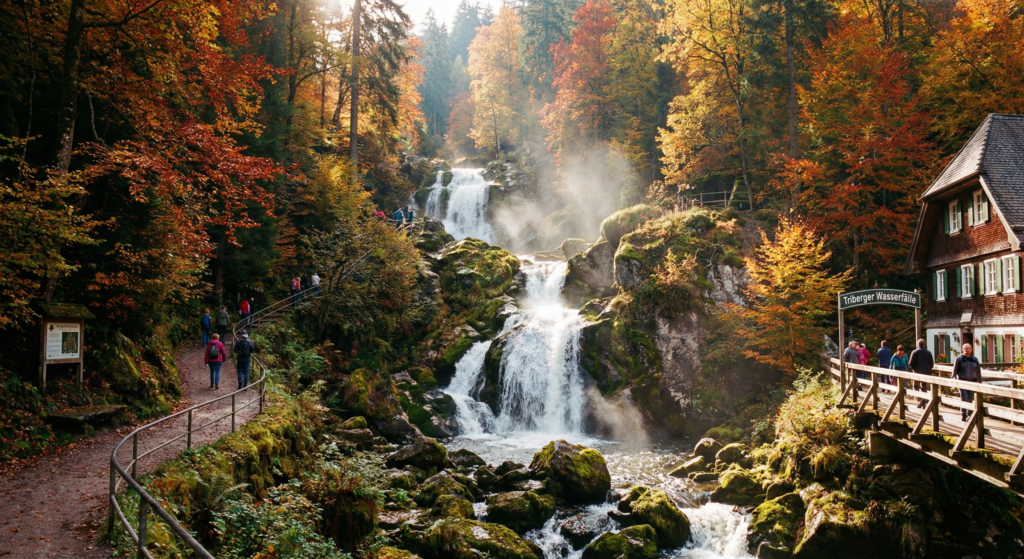
The Black Forest is known for its dense evergreen forests, traditional villages, and folklore roots. This is the region that inspired many Grimm Brothers’ fairytales — and you can feel that mystical atmosphere in the misty mornings. It’s also famous for cuckoo clocks and, of course, Black Forest cake. Scenic drives wind through rolling hills and quiet valleys. It feels peaceful, slightly mysterious, and deeply rooted in tradition.
Do
- Hike Triberg Waterfalls
- Drive the Black Forest High Road
- Visit traditional villages
Eat
Black Forest cake (of course)
Try Café Adler in Triberg.
Stay
- Hotel Bareiss
- Schwarzwald Panorama
Tip
The region inspired many of the Grimm Brothers’ fairytales. When you’re thinking about places to visit in Germany, you won’t want to miss this!
Rothenburg ob der Tauber
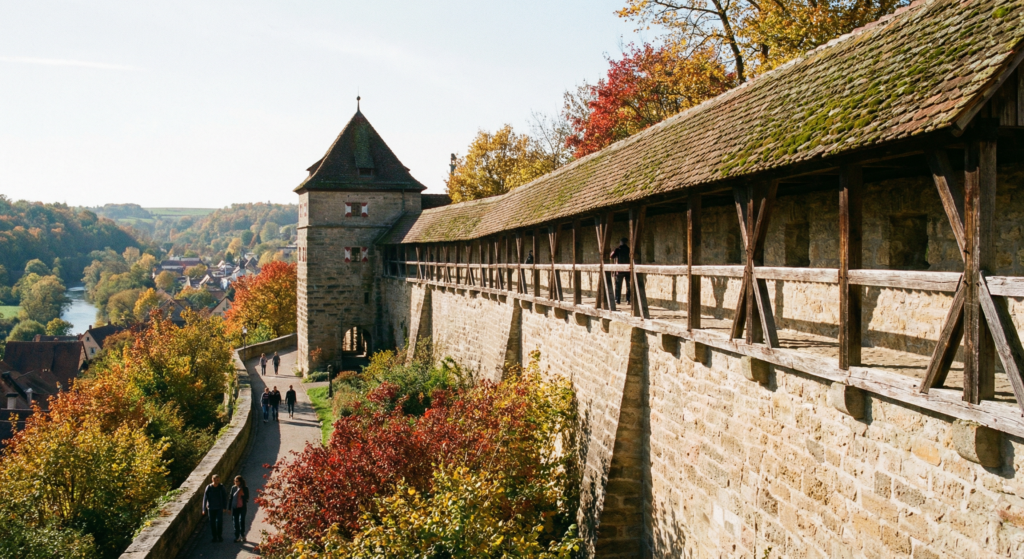
Known For
Rothenburg is known for being one of the best-preserved medieval towns in Europe. Its city walls, timber-framed houses, and cobbled streets look almost untouched by time. It’s the kind of place that feels like a movie set — except it’s completely real. During Christmas season, it becomes especially magical. It captures that fairytale Germany so many travelers imagine.
Do
- Walk the city walls
- Visit the Christmas Museum
- Explore Market Square
Eat
Schneeballen (local pastry)
Try Gasthof Goldener Greifen
Stay
- Hotel Eisenhut
- Romantik Hotel Markusturm
Tip
Stay overnight — the town is magical once day-trippers leave.
Dresden
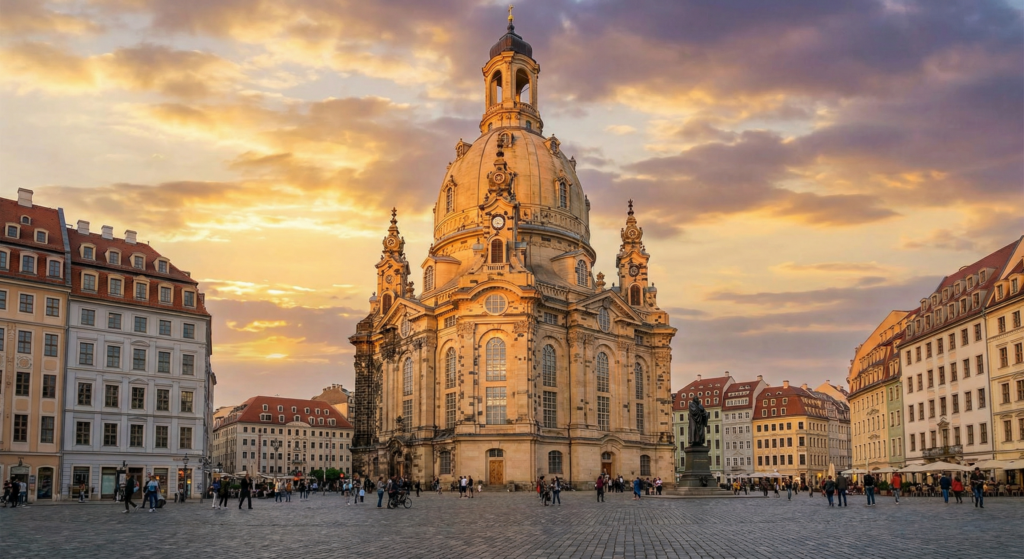
Known For
Dresden is absolutely one of the places to visit in Germany! It’s known for its baroque architecture and remarkable restoration story. Once heavily destroyed during WWII, much of the city was rebuilt stone by stone. Today it stands as a symbol of resilience and cultural pride. The skyline along the Elbe River is breathtaking, filled with domes and palaces. It feels grand and artistic — often called “Florence on the Elbe.”
Do
- Visit Frauenkirche Dresden
- Explore Zwinger Palace
- Walk along the Elbe River
Eat
Saxon potato soup
Café tip: Café Toscana
Stay
- Hotel Taschenbergpalais Kempinski Dresden
- INNSiDE Dresden
Tip
Much of the city was reconstructed stone by stone after WWII.
Zugspitze
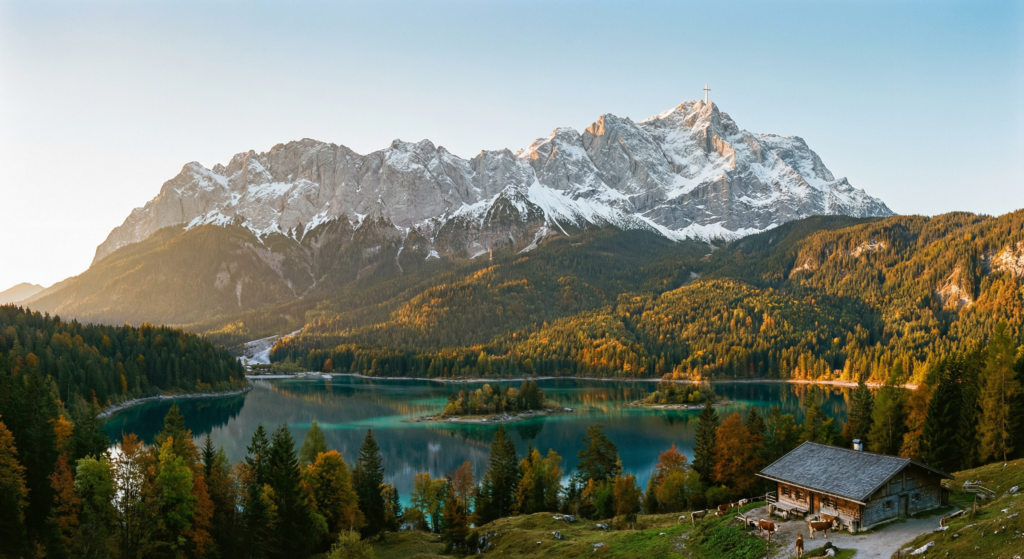
Known For
Zugspitze is known as Germany’s highest peak and a gateway to alpine adventure. From the summit, you can see across Germany and into Austria on clear days. Snow often caps the mountain even when valleys below are green. It’s a place of dramatic landscapes and fresh mountain air. Standing at the top feels expansive and freeing.
Do
- Take the cable car
- Visit the glacier
- Ski in winter
Eat
Mountain hut meals — hearty soups and schnitzel.
Stay
- Eibsee Hotel
- Hotel Zugspitze
Tip
You can stand with one foot in Germany and one in Austria at the summit. One of the most popular places to Visit in Germany!
Local Hidden Gems
Bamberg
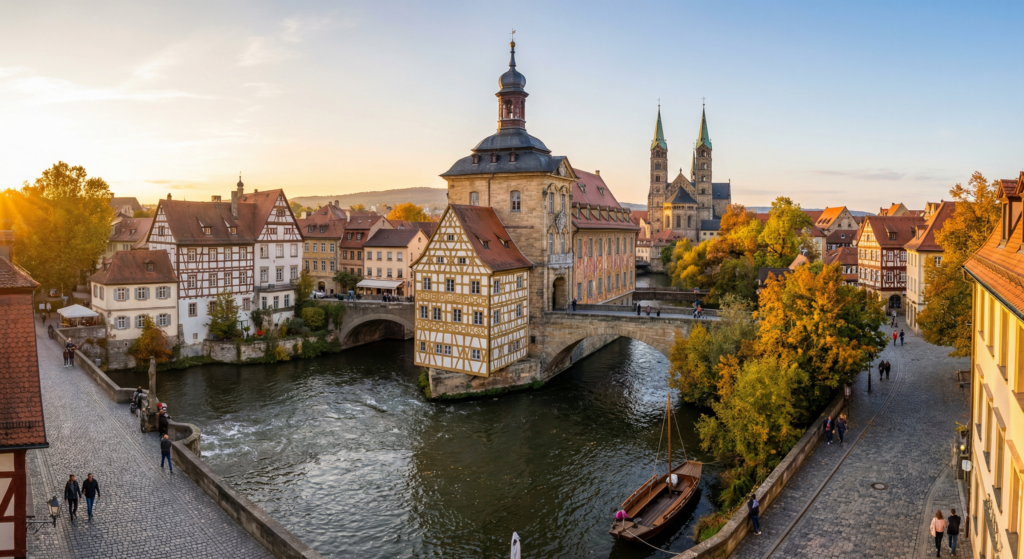
What It’s Known For
Bamberg is known for its remarkably preserved medieval old town and unique smoked beer tradition. Built across seven hills, it has a distinct charm and character. The old town hall sits picturesquely in the middle of a bridge — something you rarely see elsewhere. It feels authentic and lived-in rather than overly touristy. There’s a quiet romance to Bamberg that locals treasure.
What To Do
- Wander the Old Town
- Visit the Old Town Hall (sitting dramatically in the middle of a bridge)
- Explore Bamberg Cathedral
- Sit along the river with a drink at sunset
What To Eat + Where
Bamberg is famous for smoked beer (Rauchbier). Even if you’re unsure — try it once.
- Schlenkerla (iconic smoked beer tavern)
- Hofbräu Bamberg (classic Franconian dishes)
- Café Müller for coffee + cake
How To Get There
Train from Munich or Frankfurt (around 2–3 hours). Germany’s regional trains make this easy.
Hotel Suggestions
- Hotel Nepomuk (right on the river)
- Welcome Hotel Residenzschloss Bamberg
- Altstadthotel Weinhaus Messerschmitt
Interesting Tip
Bamberg’s old town survived WWII largely untouched — which is why it feels so authentic. Definitely a top priority to add to your list of places to visit in Germany
Tübingen
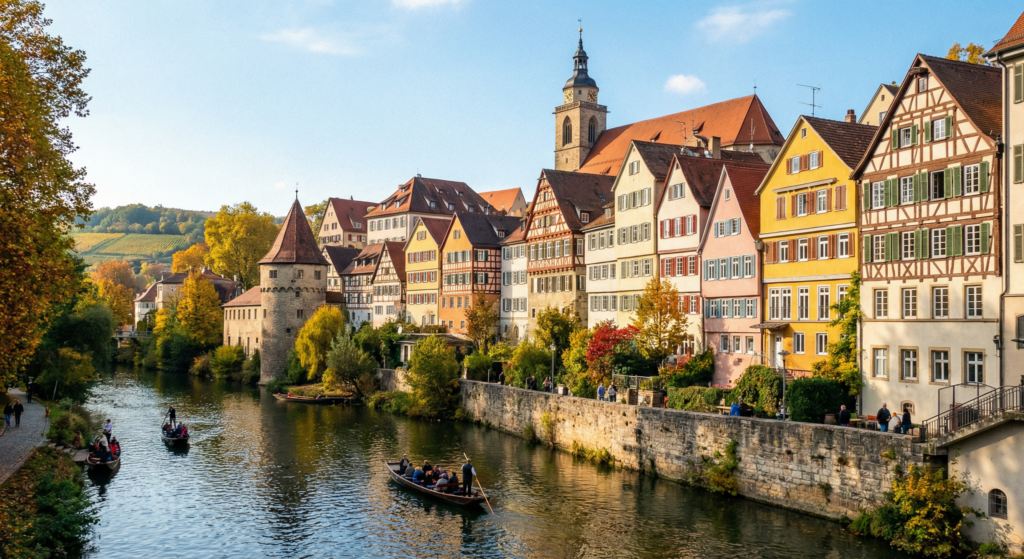
What It’s Known For
Tübingen is known for its colorful riverside houses and vibrant university culture. The town feels youthful, intellectual, and cozy all at once. Traditional wooden punt boats glide along the river in warmer months. Its small size makes it wonderfully walkable. It’s charming without being flashy.
What To Do
- Take a traditional wooden punt boat ride on the Neckar River
- Climb up to Hohentübingen Castle
- Browse tiny bookstores and artisan shops
What To Eat + Where
Swabian cuisine is hearty and comforting.
- Try Maultaschen (German-style dumplings)
- Neckarmüller (local favorite)
- Café Lieb for pastries
How To Get There
Train from Stuttgart (about 1 hour).
Hotel Suggestions
- Hotel Krone Tübingen
- Boutiquehotel La Casa
Interesting Tip
It feels like Heidelberg — but without the tour buses.
Saxon Switzerland National Park
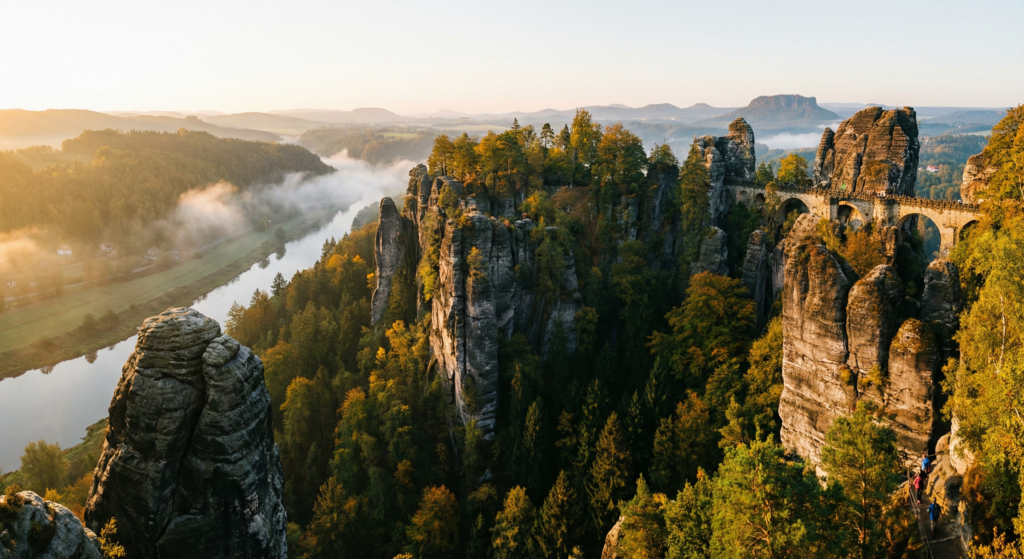
What It’s Known For
Saxon Switzerland is known for its dramatic sandstone cliffs and panoramic hiking trails. The rock formations look almost sculpted by hand. It’s a dream for photographers and nature lovers. The views over the Elbe River are unforgettable. Despite its beauty, it remains far less crowded than many alpine destinations.
What To Do
- Walk across the Bastei Bridge
- Hike panoramic trails
- Take sunrise photos above the Elbe River
What To Eat + Where
Small guesthouses serve traditional Saxon dishes.
- Try hearty soups and local sausages
- Berggasthof Bastei for views with your meal
How To Get There
Train from Dresden (about 45 minutes), then short bus or hike access.
Hotel Suggestions
- Hotel Elbresidenz Bad Schandau
- Hotel Lindenhof Bad Schandau
Interesting Tip
Despite the name, it’s entirely in Germany — so it’s definitely one of the places to visit in Germany! The landscape just reminded Swiss artists of home.
Görlitz
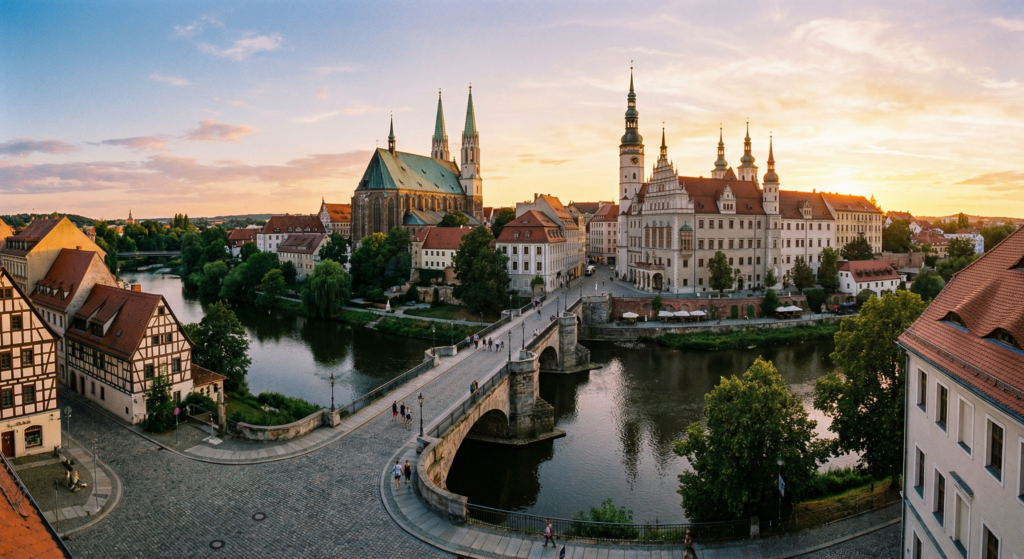
What It’s Known For
Görlitz is known for its perfectly preserved architecture spanning Gothic to Art Nouveau styles. The city escaped much wartime destruction, leaving it visually stunning. It has served as a filming location for many international movies. Walking through Görlitz feels cinematic. It’s refined and surprisingly peaceful.
What To Do
- Wander through cobbled squares
- Visit St. Peter’s Church
- Cross the bridge into Poland for coffee
What To Eat + Where
- Try Silesian specialties
- Goerlitzer kartoffelhaus
How To Get There
Train from Dresden (about 1.5 hours).
Hotel Suggestions
- Hotel Börse Görlitz
- Romantik Hotel Tuchmacher
Interesting Tip
It’s sometimes called “Görliwood” because of its film history.
Lake Eibsee
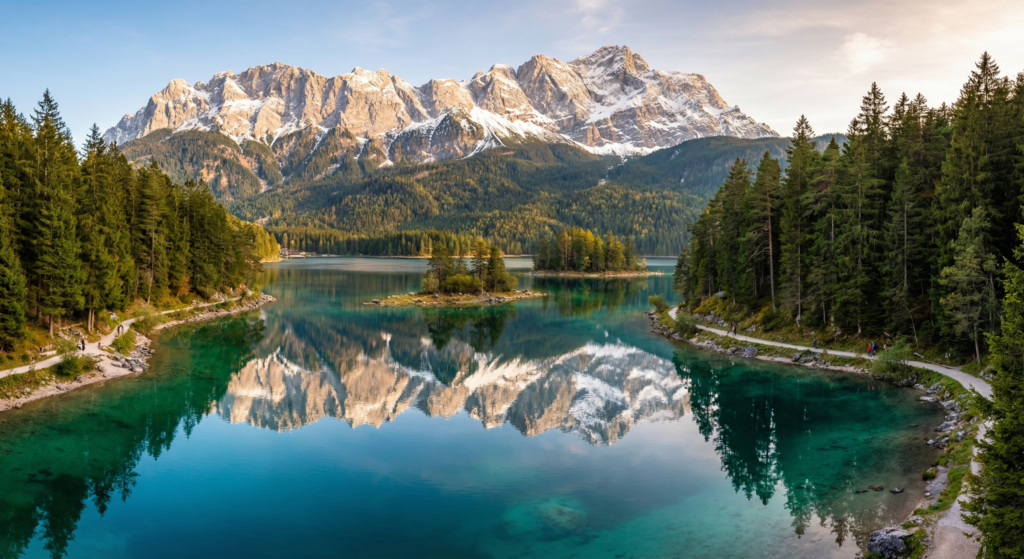
What It’s Known For
Lake Eibsee is known for its crystal-clear turquoise waters beneath the Zugspitze. The lake reflects the mountains so clearly it almost looks painted. It feels serene and untouched compared to busier lakes. In summer, it’s perfect for swimming and paddle boating. It’s alpine beauty at its finest.
What To Do
- Walk the lake loop trail
- Rent a paddle boat
- Swim in summer
What To Eat + Where
- Light alpine meals
- Eibsee Pavilion for lake views
How To Get There
Train to Garmisch-Partenkirchen, then local bus.
Hotel Suggestions
- Eibsee Hotel
- Hotel am Badersee
Interesting Tip
Go early in the morning — the water turns glass-like and perfectly reflective. One of the most beautiful places to visit in Germany.
Quedlinburg
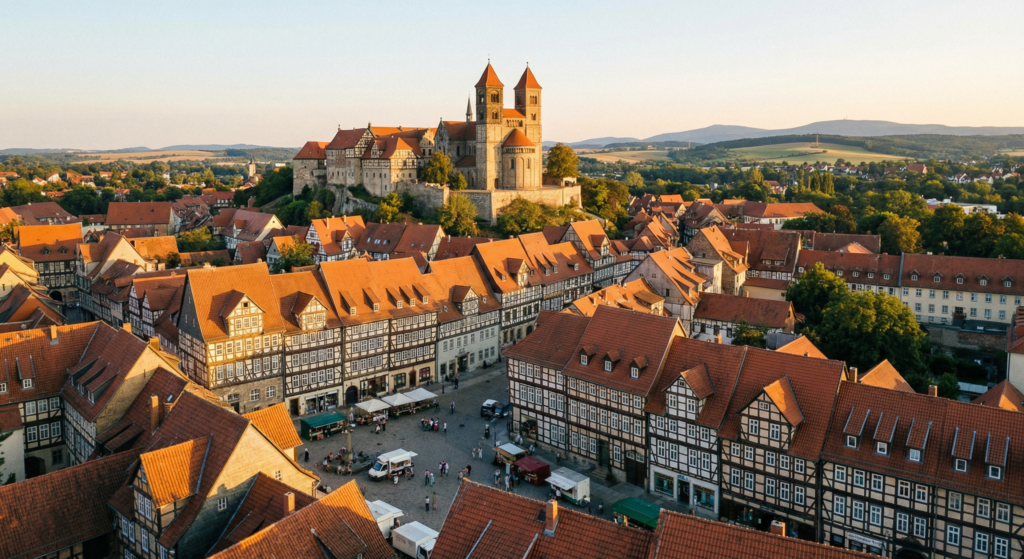
What It’s Known For
Quedlinburg is known for its astonishing collection of half-timbered houses. Over 1,000 historic buildings line its winding streets. It feels frozen in time. The town sits at the edge of the Harz Mountains, adding to its scenic appeal. It’s quietly magical.
What To Do
- Wander the old town
- Visit Quedlinburg Castle
- Explore small antique shops
What To Eat + Where
- Traditional Saxon-Anhalt cuisine
- Brauhaus Lüdde (cozy and authentic)
How To Get There
Train from Berlin (about 2.5 hours).
Hotel Suggestions
- Romantik Hotel am Brühl
- Best Western Hotel Schlossmühle
Interesting Tip
It’s one of the best-preserved medieval towns in Europe.
Spreewald
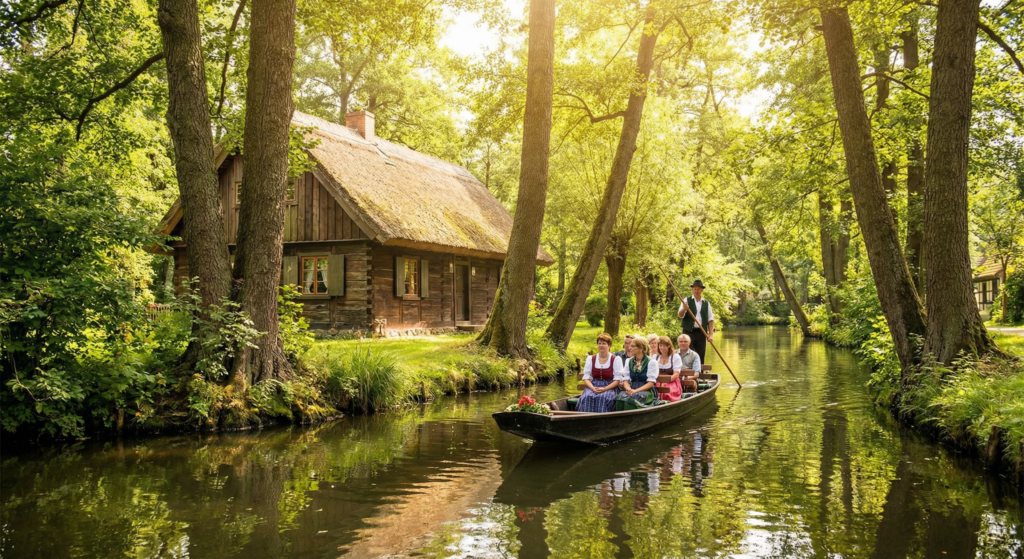
What It’s Known For
Spreewald is known for its maze-like network of forest canals. Often called “Germany’s Venice,” it offers peaceful waterway travel through lush greenery. Traditional Sorbian culture is still alive here. It’s famous for its pickles and rural charm. Life moves slower in Spreewald.
What To Do
- Kayak through canals
- Visit traditional Sorbian villages
- Cycle through the countryside
What To Eat + Where
Spreewald is famous for pickles.
- Try Spreewaldgurken
- Der Kräutermühlenhof in Burg
How To Get There
Train from Berlin (about 1 hour).
Hotel Suggestions
- Hotel Zur Bleiche Resort & Spa
- Spreewald Thermenhotel
Interesting Tip
Some homes are only accessible by boat.
Freiburg im Breisgau
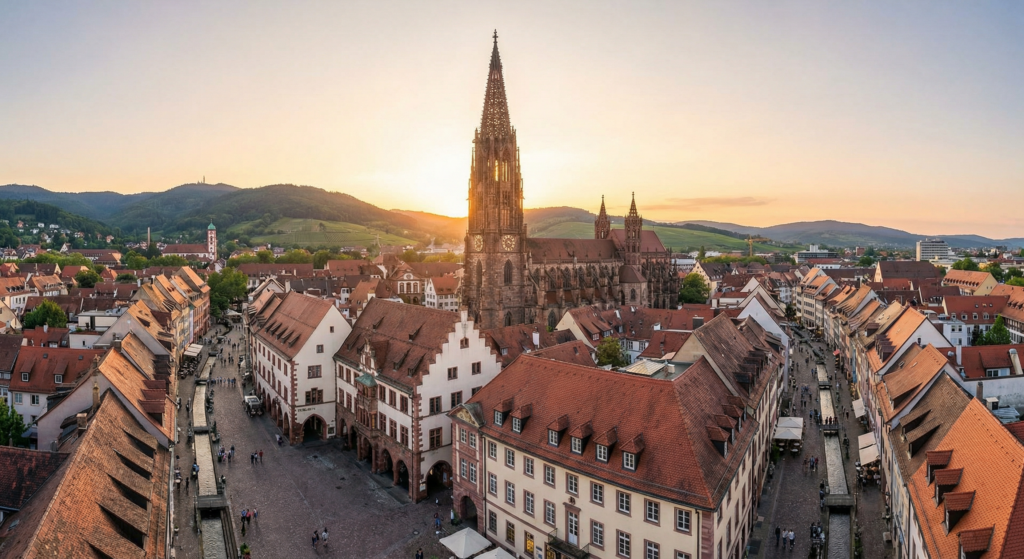
What It’s Known For
One of the must-see places to visit in Germany is Freiburg. It is known as Germany’s sunniest city and a leader in sustainability. It blends medieval charm with eco-conscious living. Vineyards and the Black Forest sit just beyond the city. Small water channels run through the streets, adding character. It feels light, relaxed, and joyful.
What To Do
- Climb Freiburg Cathedral
- Wander cobbled streets with tiny water channels (Bächle)
- Explore nearby vineyards
What To Eat + Where
- Flammkuchen
- Hausbrauerei Feierling
How To Get There
Train from Frankfurt or Stuttgart.
Hotel Suggestions
- Colombi Hotel
- Hotel Oberkirch
Interesting Tip
Step in the Bächle (water channels) and legend says you’ll marry someone from Freiburg.
Wernigerode
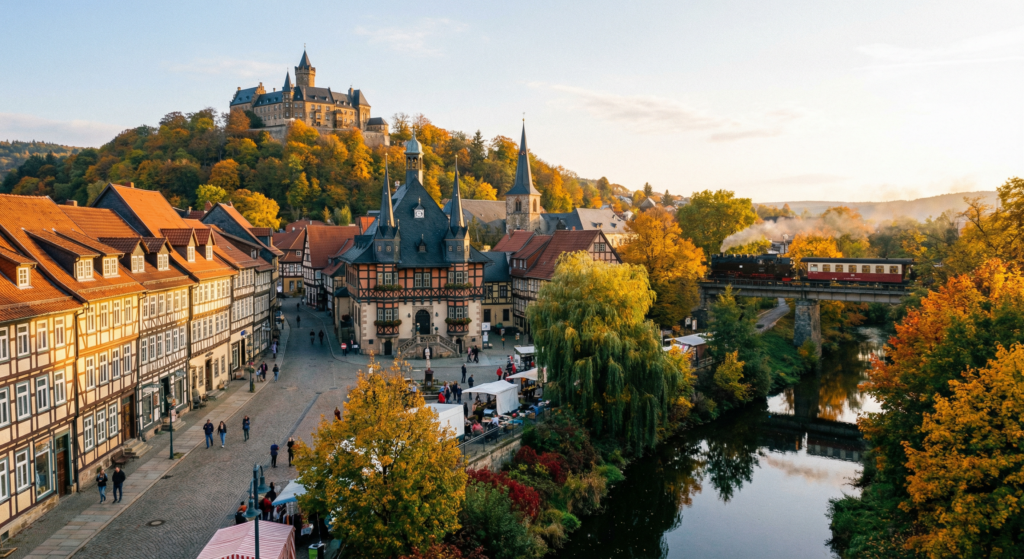
What It’s Known For
Wernigerode is known for its pastel-colored houses and fairytale castle. Nestled in the Harz Mountains, it feels tucked away from the rush of modern life. Steam trains still run through the mountains nearby. It’s cozy and picturesque. Autumn here is especially breathtaking.
What To Do
- Visit Wernigerode Castle
- Ride the historic steam train into the Harz Mountains
What To Eat
Hearty mountain food at Kartoffelhaus Wernigerode
Stay
- Travel Charme Gothisches Haus
- Ringhotel Weißer Hirsch
Tip
Visit in autumn — the forests turn gold.
Berchtesgaden National Park
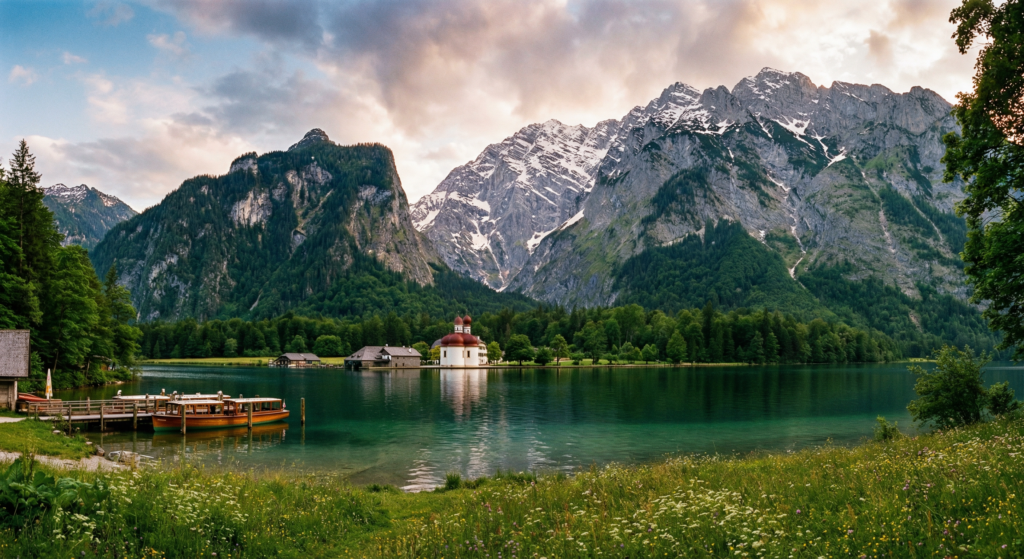
What It’s Known For
Berchtesgaden National Park is known for its dramatic alpine landscapes and pristine lakes. The emerald waters of Königssee are almost impossibly clear. Towering peaks surround the region. It feels wild and majestic. Nature takes center stage here, so make sure you add this to your list of places to visit in Germany!
What To Do
- Boat ride on Königssee
- Hike scenic alpine trails
- Visit the Eagle’s Nest viewpoint
What To Eat
Mountain hut meals with panoramic views.
How To Get There
Train from Munich to Berchtesgaden (about 2.5 hours).
Hotel Suggestions
- Kempinski Hotel Berchtesgaden
- Hotel Edelweiss Berchtesgaden
Interesting Tip
The lake’s echo demonstration during boat tours is unforgettable.
Final Thoughts: Why Germany Will Always Be Special to Me
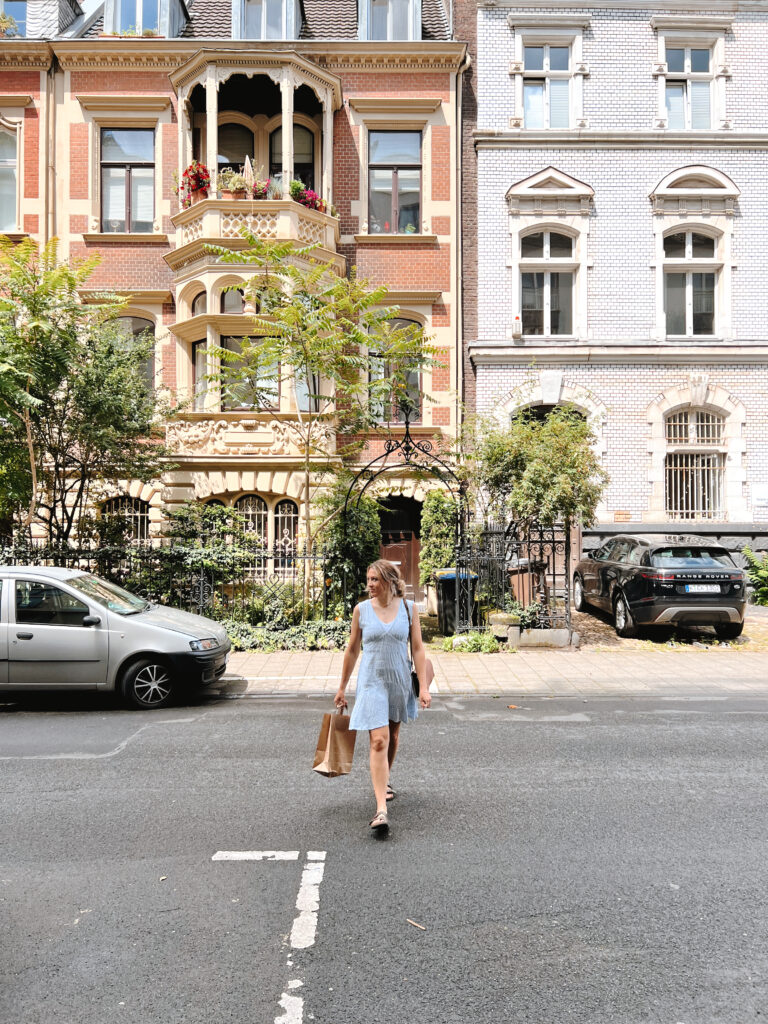
When I first moved to Germany two years ago, I didn’t realise how much I would love it.
Germany has been the backdrop of slow Sunday walks, cozy café mornings, train rides through rolling countryside, and the kind of quiet moments that make you reflect on your life in a deeper way. It’s where I’ve learned to appreciate rhythm — the way seasons change, the way villages hold history, the way life doesn’t always need to rush.
There is something about standing in a medieval town square, knowing it has existed for hundreds of years, which is still wild to an Australian!
And there is something about living here — not just visiting — that has taught me to notice the details.
The bakeries.
The church bells.
How green everything is.
Germany isn’t just castles and cathedrals. It’s everyday beauty woven into history.
If you ever get the chance to come here, I hope you don’t just tick off the big landmarks. I hope you wander a little. Take the regional train instead of the fast one. Sit longer at dinner. Walk without a destination.
Because this country has a way of slowing you down — and sometimes that’s exactly what our souls need.
Living here for these past two years has been such a gift. And sharing these places with you feels like sharing little pieces of my own story.
If Germany is on your bucket list… I hope this post gave you both the iconic dreams and the hidden corners.
And if you’re already planning your trip?
Friend — you’re going to love it. 🤍
If you enjoyed this, you might also like:
-6 Castles in Germany you can actually stay in
-10 best things to do in Newcastle

Thank you!!!

Leave a Reply